


Back to Top
News From The Bedford, Morison and Cordery Almshouses
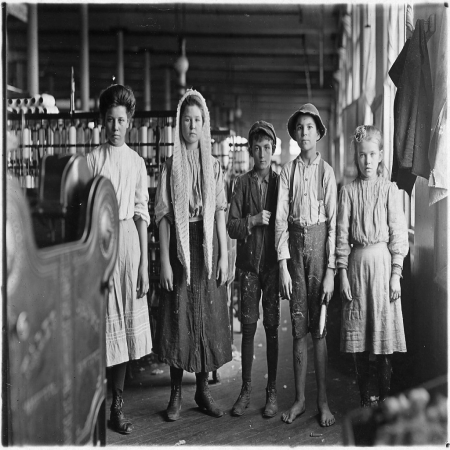
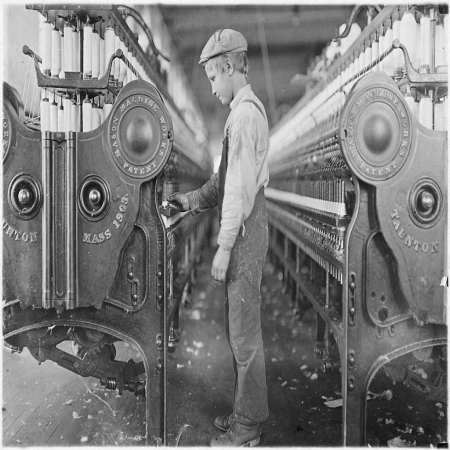
The Scandal of Watford's Silk Mill Children
Added on 01/10/23
Watford History Corner - Memories and Stories In the 18th century Watford became a major producer of silk. The Rookery Silk Mill, which opened in 1770 and was the biggest mill, was situated behind the current General Hospital (hence the nearby Silk Mill Road). Like other mills in the country, it employed children to operate machinery, and in 1832 it became the subject of an inquiry by the House of Commons in respect of the welfare of its young employees. The findings were truly shocking.
Thomas Daniel, a mill supervisor, was questioned by the committee. He told them that a great number of children, mainly girls, were employed at the mill. Daniel was asked whether accidents and injuries were a frequent occurrence; he replied that accidents were an occupational hazard when working with machinery. He went on to say that most accidents were “generally trifling, being rarely more than the loss of the end of a finger or fingers”.
The next witness was Daniel Fraser, an agent of the committee who had investigated the conditions of work at the Rookery silk mill. He found that children started working there as young as five or six. The mill was in operation by both day and night for six days of the week; the children would start work at 6am and work until 7pm with breaks amounting to one hour and twenty minutes. It was also common for children to be required to work an additional two hours overtime, making their working day 15 hours. Stools were provided for the younger children who were not tall enough to reach the bobbins. It was usual for children to stand on the sides of their feet towards the end of their shift to ease the pain. Children starting work at the mill were paid a shilling per week, whilst older children in their mid-teens earned 3/6d. Fraser also stated that he had seen frequent occurrences of children being “urged to work by being beaten with canes”. He said that one boy called Richard Love, aged between 12 and 15, “had received a bleeding wound to the right side of his face” because a bobbin had become loose on a machine.
The findings of the enquiry into the scandalous exploitation of children led to the Factory Act of 1833 in which children under the age of nine were barred from working in textile factories. The hours for children aged 9 to 13 were limited to 48 hours and for those between 13 and 18 years to 69 hours. It also laid down that every factory child should receive two hours of schooling per day. A further Factory Act of 1844 reduced the working hours of children and women, and introduced a requirement for dangerous machinery to have shields to prevent injury.
Images: By Lewis Hine - U.S. National Archives and Records Administration


© 2026 The Bedford, Morison and Cordery Almshouses - A Registered Charity 207042