


News From The Bedford, Morison and Cordery Almshouses
Step back in time with us as we explore the vibrant tapestry of life in Watford during the early 20th century. Through the nostalgic lens of J. Gloag's "Recollections of Watford," we uncover the charming world of local tradespeople who once served the community with dedication and skill.
Tucked away on a shelf in Watford’s reference library is a slim volume entitled “Recollections of Watford” by J. Gloag. The author evidently lived in the town during the first half of the 20th century, and his memories paint a vivid picture of everyday life during those years. In one chapter, he recalls the local tradesman who plied their wares and services through the streets of Watford.
The Baker's Daily Delight
He has fond memories of the baker, who visited each day in his horse drawn van; in an era before wrapped loaves, the aroma of freshly baked bread would fill the nostrils of all those in the vicinity. Bread, he recalls, was baked in various sizes – the tin loaf, the cottage loaf and the quarter loaf, all in white or brown.
The Muffin Man's Melody
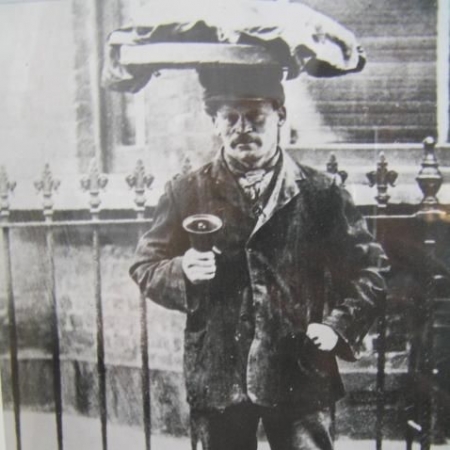
The muffin man would make his rounds, ringing a hand bell and carrying on his head a large tray of freshly made muffins. These would often provide a tasty tea for a family.
The Dairyman's Deliveries
The local dairyman would also carry out his daily round, pushing a large three wheeled trolley or float surmounted by a brass churn which contained the milk. On each side of the float were rails, on which were hung metal cans in various sizes – half pint, pint and quart. He would fill one of these cans, as required, and deliver it to the house where he would carefully pour it into the housewife’s jug.
The Butcher's Shop Experience
Watford had a number of butchers shops, each with sawdust covered floors and carcases hanging up in the window. The housewife could select the joint of her choice, and this would be placed aside for delivery. The butcher’s boy would arrive at the house later with the order carried in a large basket attached to his bicycle.
Stocks of fresh and perishable foods were kept to a minimum by the housewife as refrigerators and deep freezers were unknown. Various means were employed to keep food fresh, including standing it in water or placing it on the tiled floors of larders. However, businesses such as fishmongers, dairymen and butchers were able to benefit from a supply of ice from the Watford Ice Depot in Wiggenhall Road.
The Coal Man's Visit
Few houses, at the turn of the 20th century, were heated by gas or electricity and the principal form of heating was by way of a coal fire. An agent from the local coal merchant would call regularly to take orders, and sacks would be brought to the house by a horse-drawn cart. Coalmen would carry the open sacks of coal and tip them in the cellar or coal shed.
The collection of refuse was, in those days, a rather more primitive arrangement than today. The dustman would call each week with an open cart pulled by a magnificent shire horse. He would bring a large basket into which he would tip the contents of the dustbin. The basket was then tipped into the open cart which, by the end of the day, could become somewhat unwholesome and insanitary.
The Versatile Knife Grinder
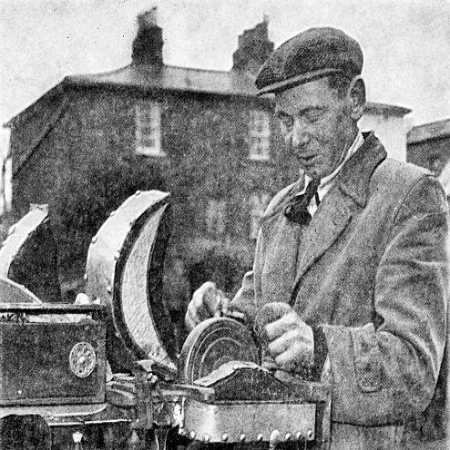
Another interesting character was the knife grinder, who would push his handcart equipped with a grindstone, glue pot, small vice and an assortment of tools for use in his trade. He would undertake to sharpen knives, scissors and garden tools, and would repair small wooden and metal items. He would also repair holes in saucepans and kettles and would re-fix loose handles on utensils. His services were a great boon to housewives in those days, and it is difficult to find a modern equivalent.
The Rag and Bone Man
Lastly, the writer recalls the rag and bone man, driving his horse-drawn cart and shouting his cry of “rag, bottle and bone”. He would purchase any unwanted item for a few pence, or present the child of the house with a goldfish in a jam jar or a paper windmill on a stick.
These local tradespeople played an integral role in the fabric of Watford's community, shaping the town's character and providing essential services to its residents.


